

Homemade Chyawanprash
Homemade Chyawanprash
Couldn't load pickup availability
A cherished family recipe passed down by Dadi, our Chyawanprash is slowly prepared over several days with amla, traditional herbs, and aromatic spices. A little taste of heritage, made with patience and love.
More Information
Product Description
Some recipes are more than just recipes; they are a piece of our heritage, passed down through generations. Our Chyawanprash is inspired by our Dadi’s traditional recipe, lovingly recreated to preserve the wisdom and traditions of our family kitchen.
Made with amla and a thoughtfully selected blend of traditional Ayurvedic herbs, roots, and spices, this time-honoured preparation brings together the richness of traditional ingredients with the warmth of age-old culinary practices.
Prepared through an elaborate, slow-cooking process that unfolds over two to three days, every stage is approached with patience and care. From gently cooking the amla in an infusion of herbs to blending it with ghee, sesame oil, aromatic spices, and other ingredients, the process honours the traditional way of making Chyawanprash.
We believe traditions are meant to be shared. That is why we are sharing not just our Chyawanprash, but our Dadi’s recipe, too, so you can recreate it in your own kitchen and pass it on to future generations.
How It Is Made
A Slow-Made Recipe, Rooted in Tradition
1. The Herbal Infusion
A carefully selected blend of traditional herbs, roots, leaves, and spices is combined with water in a large iron kadhai to create the foundation of the Chyawanprash.
2. Slowly Cooked Amla
Fresh amla is wrapped in a cloth potli and gently simmered in the herbal infusion over low heat for three hours. The mixture is then left to rest overnight.
3. Preparing the Amla Base
The cooked amla is removed from the potli, deseeded, and blended with reserved cooking liquid to create a smooth puree.
4. Slow Cooking with Ghee and Sesame Oil
The amla puree is cooked with ghee and sesame oil over low heat for one hour. Sugar is then added, and the mixture is cooked for another four hours, with occasional stirring, until it thickens.
5. Adding the Finishing Ingredients
The mixture is allowed to cool slightly before saffron is added. After another overnight rest, banslochan, nagakesar, tejpatta powder, dalchini powder, pipali powder, elaichi powder, and honey are mixed in thoroughly.
6. Bottling with Care
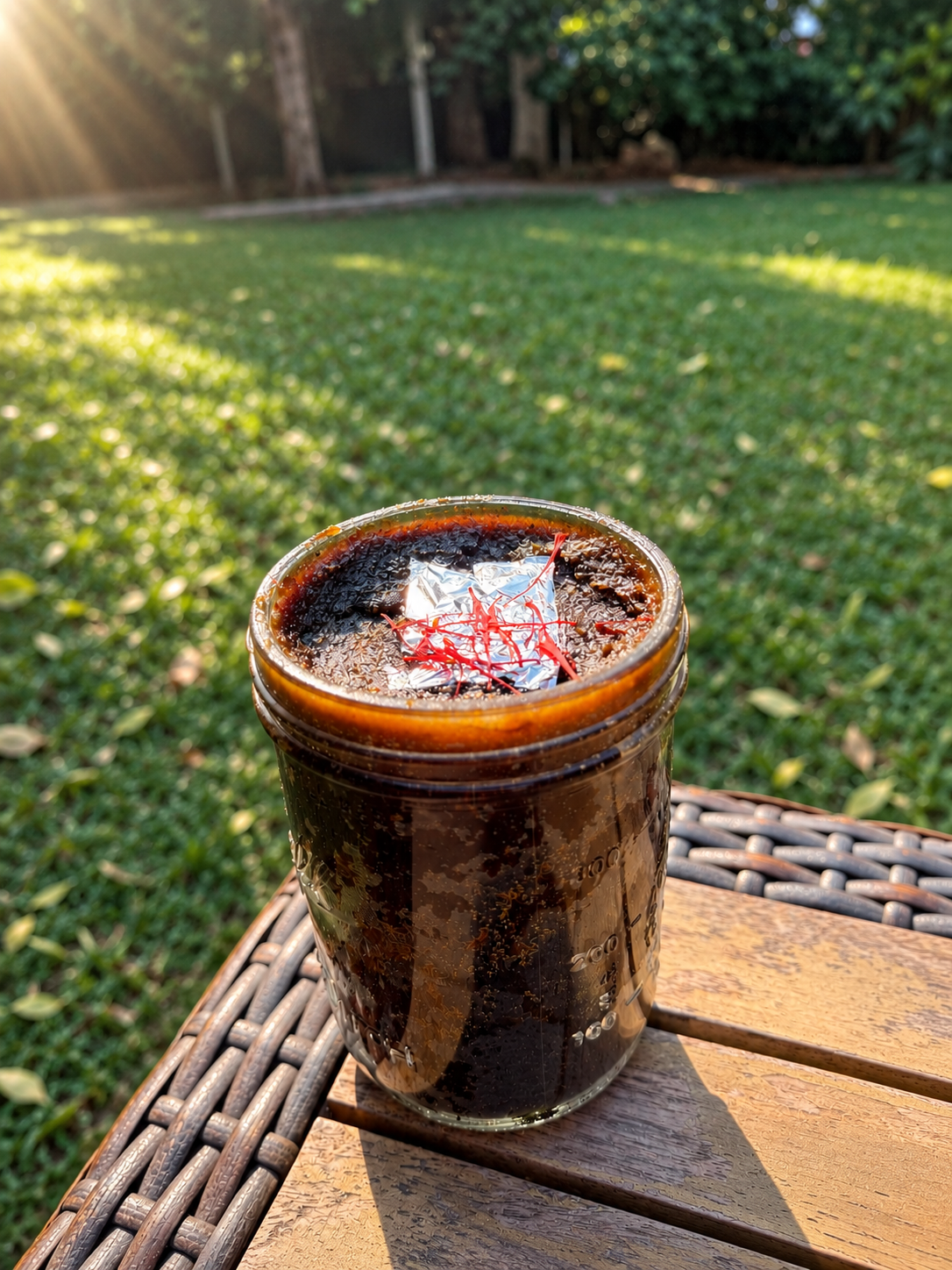
The finished Chyawanprash is transferred into clean, sanitised, completely dry containers and may be garnished with edible silver or gold vark and additional saffron.
Ingredients
For the Herbal Decoction and Amla Base
50 g Bidrikand
50 g Safed Chandan
50 g Vasaka
50 g Akarkara Shatavari
50 g Brahmi
50 g Bilva
50 g Choti Harr (Haritaki)
50 g Kamal Kesar
50 g Jatamansi
50 g Gokhru
50 g Bel
50 g Kachoor
50 g Nagarmotha
50 g Laung
50 g Pushkarmoola Kakadsinghi
50 g Dashamoola
50 g Jiwanti
50 g Punarnava
50 g Anjeer
50 g Ashwagandha
50 g Giloya
50 g Tulsi leaves
50 g Meetha Neem
50 g Saunth
50 g Munakka
50 g Mulethi
10 litres water
5 kg amla
For Cooking and the Final Blend
250 ml sesame oil
250 ml ghee
3 kg sugar
6 g saffron
150 g banslochan
20 g nagakesar
20 g tejpatta powder
50 g dalchini powder
100 g pipali powder
20 g elaichi powder
250 g honey
For Garnishing (Optional)
Edible silver or gold vark
A few additional strands of saffron
Method
Step 1: Prepare the Herbal Decoction
Add all the herbs to a large iron kadhai. Pour in half the water and mix well. Add the remaining water and stir to combine.
Step 2: Cook the Amla
Tie the amla in a clean cloth potli and immerse it in the kadhai. Cover with a lid and cook over low heat for three hours.
Once cooked, turn off the heat and allow the mixture to rest overnight.
Step 3: Prepare the Amla Puree
The next day, remove the amla potli from the kadhai. Reserve one litre of the liquid from inside the potli. Deseed the amla and blend it with the reserved liquid until you obtain a smooth puree.
Step 4: Cook with Ghee and Sesame Oil
Add the sesame oil and ghee to the iron kadhai and heat gently. Add the amla puree and cook over low heat for one hour, stirring occasionally.
Step 5: Add Sugar and Continue Cooking
Add the sugar and mix thoroughly. Continue cooking over low heat for another four hours, stirring occasionally to prevent the mixture from sticking or burning.
Step 6: Add Saffron
Once the mixture has thickened, remove it from the heat and allow it to cool slightly. Add the saffron and mix well. Leave the preparation to rest overnight.
Step 7: Complete the Final Blend
The following day, add the banslochan, nagakesar, tejpatta powder, dalchini powder, pipali powder, elaichi powder, and honey. Mix everything thoroughly until evenly combined.
Step 8: Store and Serve
Transfer the finished Chyawanprash into clean, sanitised, completely dry containers. Garnish with edible silver or gold vark and additional saffron, if desired.
Always use a clean, dry spoon when serving.
How To Consume
Take the recommended serving as directed on the product label, preferably in the morning.
Enjoy it on its own or mix it with lukewarm milk or water.
Always use a clean, dry spoon.
Precautions
Not recommended during pregnancy.
If you have any existing medical condition, take regular medication, or are breastfeeding, consult your doctor before consumption.
Contains sugar and honey; people with diabetes or blood sugar concerns should seek medical advice before use.
Storage & Shelf Life
For best quality, store in a cool, dry place or refrigerate. Keep the container tightly closed and always use a clean, dry spoon.
Shelf life: Up to 1 year, subject to validation for the recipe and storage conditions.For best quality, store in a cool, dry place or refrigerate. Keep the container tightly closed and always use a clean, dry spoon.
Shelf life: Up to 1 year, subject to validation for the recipe and storage conditions.